
{主关键词}
- 152860国家级都市圈再落子,为何是它?
- 223240杀疯了!国乒“女铁人”7小时3战全过关
- 87300最新研判:“沙德尔”将在浙江象山到福建连江沿海登陆(台风级或强台风级),浙江局地将承接最猛烈降雨,杭州已启动防台风Ⅳ级应急响应
- 1087小米汽车:澎程 N90 Max 智能电动门可实现开门杀预警及开门避障
- 687抽废料 炼黄金!超爽解压增量《吸吸吸有限公司》明日发售!
- 1109689流感高发季 别让它偷袭你
- 4975外交部:中方将继续坚决打击一切形式的恐怖主义 切实保护恐怖主义受害者的权利
- 91391《Pokémon TCG》Delta Reign ETB 首度曝光,大家的评价出奇一致
- 210Imran demands end to 'reign of robbers' in Sindh
- 576988关于宇宙神秘FRB的五种推测:或来自黑洞坍塌
- 727加快推动中医药事业和产业高质量发展
- 776501圣诞假期道路死亡人数升至6人
- 838阿根廷刚宣布“盈利”,国内就爆发全国罢工,到底谁“赚钱”了?
- 768华安基金:创业板50指数聚焦四大新质生产力赛道
- 357投诉京东明日达,实际为诱导客户下单
- 11785苹果美股市值一夜蒸发1500亿美元,美联储将继续大幅加息!_通胀_预期
- 4642女子吐槽市监局上班时间没人后续:市监局称误会消除!县社媒沦陷
- 9885402WTT球星挑战赛陈梦因病退赛
- 443单色液晶屏JX12232K,COB液晶显示模块,12232液晶屏_com_http
- 3241155雷军宣布9月是小米科技大月!小米18 Fold月初登场、18 Pro系列月底发布
- 950世界人形机器人运动会开幕,加速进化C位出道!
- 315聚石化学:终止2024年度向特定对象发行A股股票事项
- Copyright @ 2016-2017 我的网站 版权所有
性爱大师
广东省广州市委原常委、政法委原书记谢晓丹严重违纪违法被开除党籍和公职_我的网站

一 |
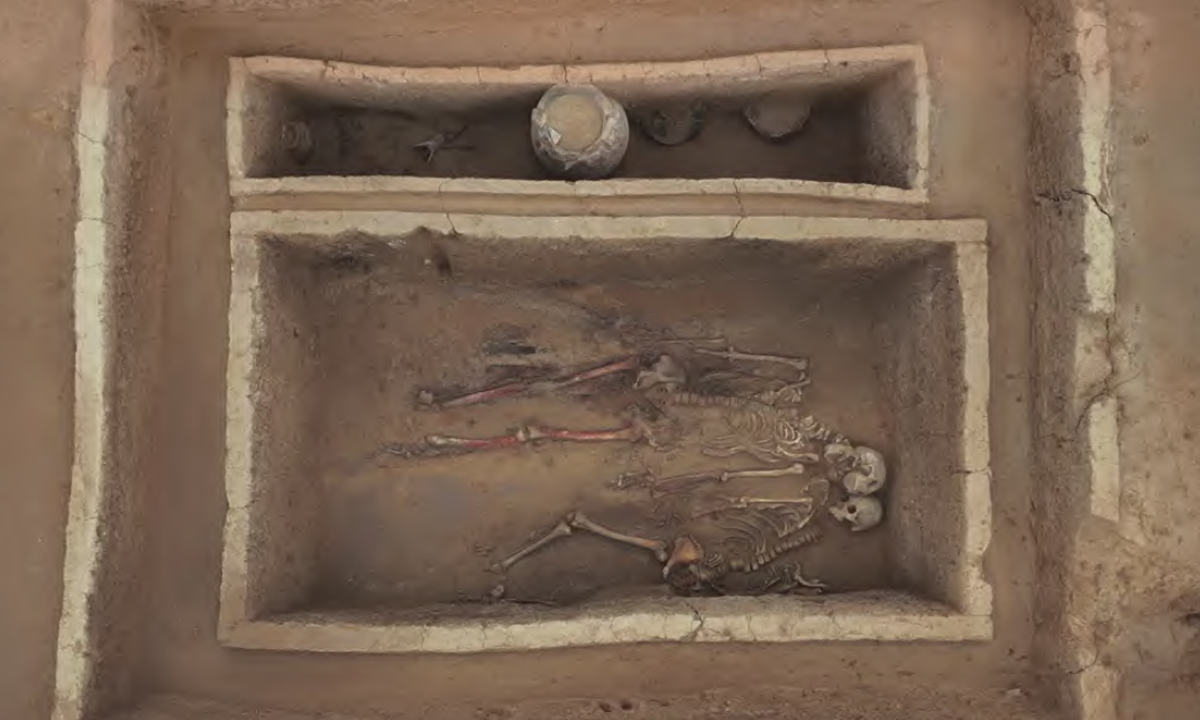
Located on a hilly terrace west of the Taihang Mountains and flanked by the Songxi River, the site was excavated in 2024 and 2025 by the Shanxi Provincial Institute of Archaeology and partner institutions, leading to the discovery of 18 tombs, including six Xia Dynasty burial sites and 12 Warring States Period (475BC-221BC) graves.
"These are the highest-ranking Xia aristocratic tombs discovered so far, indicating that this location was a regional center," the institute said.
The Xia Dynasty is traditionally regarded as China's first hereditary dynasty, though contemporaneous written records are lacking.
The well-organized Xia tombs, concentrated in the western part of the cemetery, feature uniform east-west oriented vertical earthen pits. Researchers recovered nearly 40 sets of artifacts with distinctive local cultural characteristics, including pottery, lacquerware and turquoise ornaments.
Extended regional surveys across the Songxi River valley yielded more than 10 Xia and Shang period sites. Test excavations at nearby relic sites unearthed pottery fragments, stone tools, bronze knives, as well as tin-bronze ingots and smelting residue, providing solid evidence of early metal mining and craftsmanship.
Local copper-iron symbiotic ore deposits confirm exploitation of these resources during the Xia and Shang eras, while typical cultural artifacts found in adjacent counties reveal widespread regional cultural exchange.
Multidisciplinary analyses further decoded the civilization's features. Ancient human remains belong primarily to the ancient population of the Central Plains with minor Mongolian Plateau genetic traits, forming a stable patrilineal clan. The community relied on millet farming and maintained long-distance resource trade networks.
Artifact provenance tests trace scallop shell ornaments to the Bohai Sea, cinnabar to Hunan-Guizhou ore belts, turquoise to the eastern Qinling Mountains area, and coffin timber to local Taihang pine trees. Such diverse materials reflect close interaction among the Taihang foothills, the press release noted.
Lab restoration unveiled refined ritual relics, including a dragon-patterned lacquer cylinder with red and black stripes and an intact lacquer gu vessel (a type of wine vessel). Turquoise plaques from the site match specimens from the Erlitou site, a core Xia cultural relic, proving cross-regional cultural interaction. Radiocarbon dating places the site's active period between 1880BC and 1450BC, aligning with the late Xia Dynasty.
Scholars confirmed the findings have helped reshape academic understanding of Xia-Shang civilizations and reconstruct multi-level settlement patterns on the western Taihang foothills, while offering new insights into social complexity and civilization development in early China.
。
日前,经广东省委批准,广东省纪委监委对广东省广州市委原常委、政法委原书记谢晓丹严重违纪违法问题进行了立案审查调查。经查,谢晓丹丧失理想信念,背弃初心使命,对党不忠诚、不老实,与他人串供并转移隐匿证据以对抗组织审查,参加迷信活动;无视中央八项规定精神,长期违规收受礼品、礼金,违规借用管理服务对象车辆;违反组织原则,不按规定报告个人有关事项,在组织函询时不如实说明问题;大肆以权谋私,利用职权为亲属在承建工程项目方面谋取利益;生活腐化,搞权色交易;贪欲膨胀,大搞权钱交易,利用职务上的便利,在工程承揽、案件办理、房地产开发等方面为他人谋取利益,并非法收受巨额财物。谢晓丹严重违反党的政治纪律、组织纪律和廉洁纪律,构成严重职务违法并涉嫌受贿犯罪,且在党的十八大后不收敛、不收手,性质严重,影响恶劣,应予严肃处理。依据《中国共产党纪律处分条例》《中华人民共和国监察法》《中华人民共和国公职人员政务处分法》等有关规定,经广东省纪委常委会会议研究并报广东省委批准,决定给予谢晓丹开除党籍处分;由广东省监委给予其开除公职处分;收缴其违纪违法所得;将其涉嫌犯罪问题移送检察机关依法审查起诉,所涉财物一并移送。

二 | 谢晓丹简历谢晓丹,男,汉族,1963年12月出生,广东潮州人,在职研究生学历,1981年8月参加工作,1987年12月加入中国共产党。

三 |
Current article:http://pk31ms.shouyouxumianpouluanteng.shop/ap4vw/fpml71.html
Published on:03:08:02
我的网站热门国内